Metal Roof Replacement in Whitesboro from $800. Common on rural Grayson County property, and priced on geometry rather than area. Free inspection and a written quote.
This is metal country and the distinction that matters is exposed-fastener against standing seam. Exposed panels are screwed through the face with washers that perish and need periodic replacement; standing seam hides its fixings, costs considerably more and asks for far less attention over thirty years.
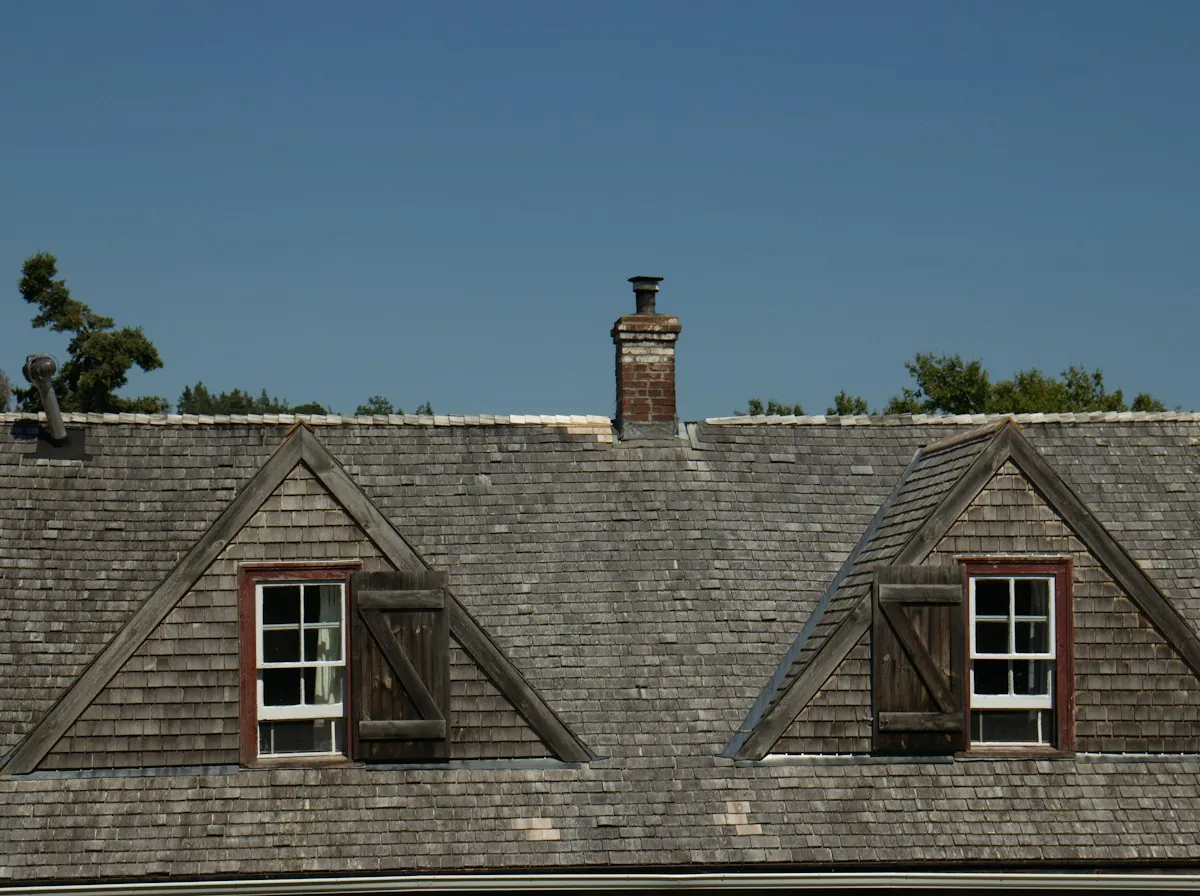
Standing seam and exposed-fastener metal are both normal on acreage and outbuildings around here, and both outlast asphalt by a wide margin. What they do not do is come cheap on a complicated roof: every valley, dormer and penetration is a detail formed by hand, and the labor is most of the cost.


Metal is the one covering on this site that cannot honestly be quoted by the square, because the cost is in the detail rather than the field. Every valley, dormer and penetration is formed by hand. On a long simple run it is competitive with a good asphalt roof over its life; on a cut-up roof it is not close. Metal moves a Whitesboro quote more than anything else, and the two systems are far apart: exposed-fastener is cheaper up front and carries periodic washer replacement, standing seam costs more and asks for almost nothing.
Exposed-fastener panels are screwed through the face with washers that perish and need periodic replacement. Standing seam hides its fixings under the seam, costs considerably more and asks for far less attention over thirty years.
Which is cosmetic on a barn and much less so on a house elevation you look at daily. Worth deciding how much that matters before it is installed rather than after the first storm.
A full re-screw -- replacing every perished washer and fastener -- is a fraction of a re-roof and is frequently the right call on a panel that is otherwise sound. We will say when that is what you actually need.
Metal is far more common out here than in Sherman, and it is worth being precise about which kind. Exposed-fastener panels are screwed through the face with washers that perish and need replacing; standing seam hides its fixings and needs far less attention. They are different products at different prices.
It is the most common reassurance offered in this market and it is hollow by construction. Here is what to ask instead.
The Texas Department of Licensing and Regulation licenses electricians and HVAC technicians. It does not license roofers, and no other state body does either. So there is no license number to check, and a contractor offering one is describing something that does not exist.
It is what gets the work inspected, which is the only independent confirmation you will ever get that the specification you paid for is the one that went on. A contractor who would rather skip it is telling you something.
The Roofing Contractors Association of Texas runs a voluntary program. It is not a license and we will not pretend it is one -- but in a state that requires nothing, what somebody has volunteered for is more informative than what they were made to do.
Metal is far more common out here, and it is worth being precise about which kind before anybody prices anything.
Against metal, the Class 4 argument shifts.
Metal changes what you are looking for entirely.
Shingle is the minority covering out here, which matters when you ring round: a contractor whose week is metal may be less interested in your composition roof than in talking you out of it.
Out here low slope is more often a metal panel at a shallow pitch than a membrane, and the failure mode is completely different: capillary action drawing water back up a lap that is fine at a steeper angle.
The one place here with a City registration rule.
Older stock: board decking, valleys, dormers.
Splits by age. The newer roofs have seen hail already.
Almost all new build. What did the builder fit?
Lake exposure, and houses nobody is in to notice.
Small simple roofs. Price should track area here.
Acreage. The barn is usually the worse roof.
What is worth knowing before you book this.
Exposed-fastener is cheaper up front and comes with a maintenance obligation: the washers perish and need periodic replacement. Standing seam hides its fixings under the seam, costs considerably more and asks for almost nothing over thirty years. On a house, standing seam is usually the better purchase.
Usually not. Metal dents rather than bruising, and a dented panel is generally still perfectly watertight. What matters is whether the coating has been broken -- because that corrodes outward from the strike point -- and whether any fastener washers were struck.
Get a second opinion before you sign anything, and ask whether they are registered with the City of Sherman. A hail line damages thousands of roofs in twenty minutes and brings out-of-town crews into the county for the season. Some are perfectly competent; the check costs you nothing and it is the only one available in a state with no license.
Yes, and it is $75 in Sherman for residential or commercial. We pull it. The inspection that comes with it is the only independent confirmation you will get that the specification you paid for is what actually went on the roof, which is worth more than the fee.
No. The inspection is free, the written quote is free, and neither carries an obligation -- including when the answer is that your roof is fine and does not need anything. What we will not do is give you a price from the driveway, in either direction.
City of Sherman registration stated -- Texas issues no license. Standard and Class 4 priced side by side, not one of them.