Hail Damage Roof Replacement in Denison from $0. What hail actually does to a roof, and how to tell real damage from a door-knocker's opinion. Free inspection and a written quote.
On older roofs the hardest part is separating hail damage from age. A slope that has lost granules over fifteen years and a slope bruised last April can look similar from a ladder, and they lead to different answers. The soft metal settles it: vents and flashings dent in a storm and do not weather that way.
Hail damage on asphalt is not usually a hole. It is bruising: the impact fractures the mat under the surface and knocks granules loose, which leaves a soft spot that ages far faster than the rest of the slope. It can be invisible from the ground and obvious under a hand on the roof.


The inspection is free and the answer might be that nothing happened. Hail damage on asphalt is bruising rather than holes -- the impact fractures the mat under the surface and knocks granules loose -- so it is invisible from the ground and obvious under a hand. If the roof is finished, replacement prices at the same $350 to $800 per square. Expect the upper half of the range on the older streets. Board decking rather than plywood, and roof shapes with more valleys and dormers per square foot, are both labor rather than area -- so a Denison price will not track square footage the way a newer roof does.
The slopes checked by hand for bruising, the soft metal -- vents, flashings, gutter aprons dent before shingles bruise -- and granule loss in the gutters. Any one alone can mislead; together they settle it.
Many do not damage roofs at all, and we will say so. This market fills with door-knockers after every hail line, and the single most useful thing a roofer can do here is give an honest no.
A two-year-old three-tab bruises more easily than a ten-year-old Class 4. What was fitted matters more than when, which is why the first question is what product is up there.
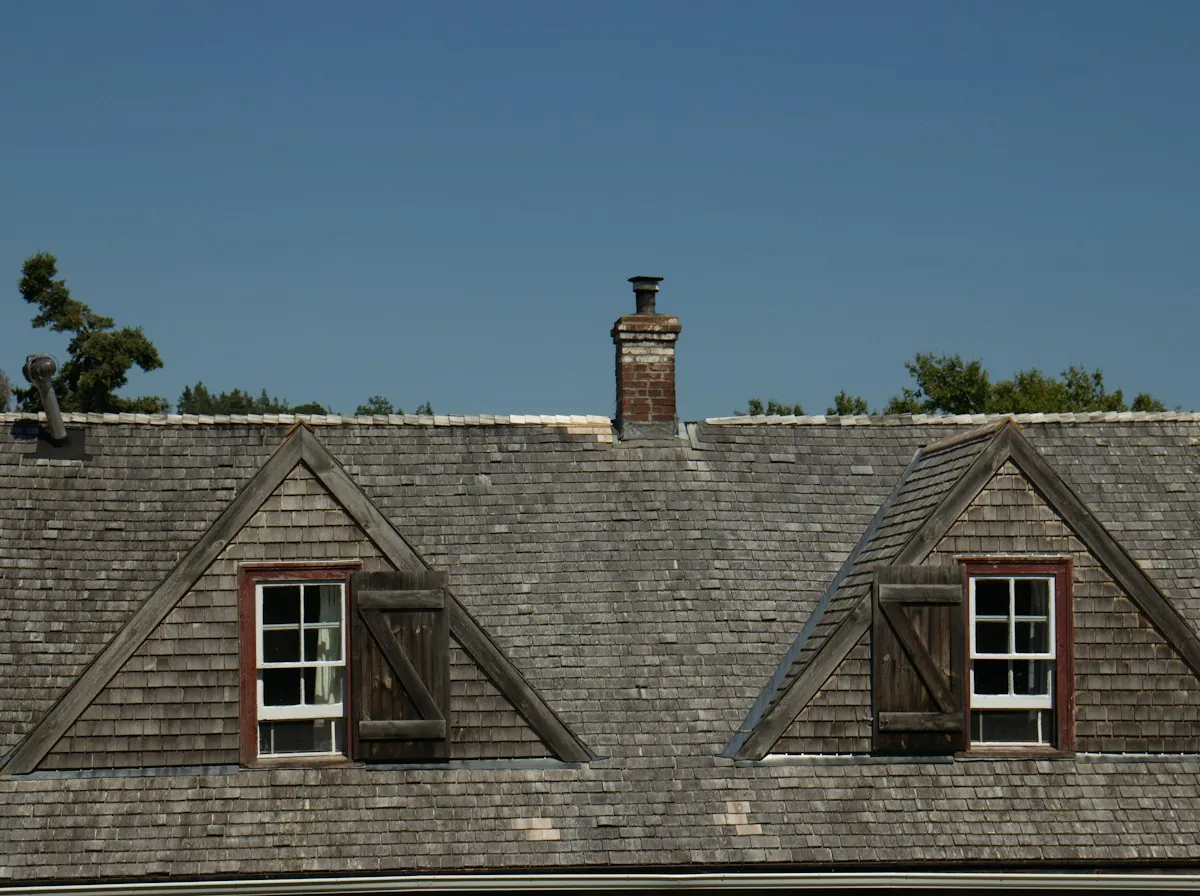
Older housing brings two things Sherman's newer neighborhoods do not: board decking rather than plywood on the oldest streets, and roof shapes with more valleys and dormers per square foot. Both are labor rather than area, so a Denison quote priced on square footage alone will be wrong. Permits go to the City of Denison.
It is the most common reassurance offered in this market and it is hollow by construction. Here is what to ask instead.
The Texas Department of Licensing and Regulation licenses electricians and HVAC technicians. It does not license roofers, and no other state body does either. So there is no license number to check, and a contractor offering one is describing something that does not exist.
It is what gets the work inspected, which is the only independent confirmation you will ever get that the specification you paid for is the one that went on. A contractor who would rather skip it is telling you something.
The Roofing Contractors Association of Texas runs a voluntary program. It is not a license and we will not pretend it is one -- but in a state that requires nothing, what somebody has volunteered for is more informative than what they were made to do.
Older housing changes the arithmetic.
On an older Denison roof with a high valley count, the Class 4 premium lands on a bigger number to begin with, because the detail work is already pushing the price up.
Older Denison roofs bring two questions before the product.
Older Denison houses are exactly the geometry metal is worst suited to -- multiple planes, dormers, valleys, sometimes a turret.
Older commercial frontages in Denison carry the genuine flat roofs on this site: larger areas behind parapets with internal drainage, and a business trading underneath.
The one place here with a City registration rule.
Splits by age. The newer roofs have seen hail already.
Almost all new build. What did the builder fit?
Metal country, and the two systems are not the same.
Lake exposure, and houses nobody is in to notice.
Small simple roofs. Price should track area here.
Acreage. The barn is usually the worse roof.
What is worth knowing before you book this.
No. Bruising does not heal and granule loss does not reverse, so the evidence is still there. It is more common than people think to find damage from a storm nobody connected to the roof at the time, particularly on a property that was empty that week.
It means it is worth looking, not that you need one. Hail falls unevenly across a street and two houses fifty feet apart can take very different hits. We will check and tell you honestly, including when the answer is that nothing happened to yours.
Texas prices asphalt by the square -- a hundred square feet. Three-tab installs at $350 to $500 per square and Class 4 impact-resistant at $500 to $800, with North Texas typically $500 to $750 for Class 4. A 2,000 square foot roof is twenty squares. The Sherman permit is $75.
It depends on how long you intend to own the house, not on the roof. Class 4 is the top UL 2218 rating -- a two-inch steel ball dropped twice on the same spot without cracking the mat -- and costs 15 to 25% more, roughly $1,500 to $3,000 on a typical home. Over twenty years in this county the arithmetic favors it comfortably. Over five it does not, and we will say so.
Get a second opinion before you sign anything, and ask whether they are registered with the City of Sherman. A hail line damages thousands of roofs in twenty minutes and brings out-of-town crews into the county for the season. Some are perfectly competent; the check costs you nothing and it is the only one available in a state with no license.
City of Sherman registration stated -- Texas issues no license. Standard and Class 4 priced side by side, not one of them.